 Fall Special Offer

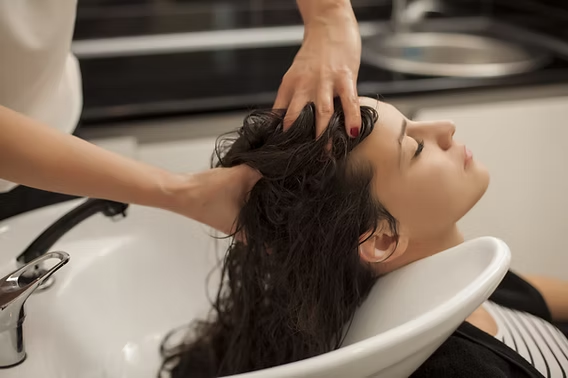
Bottom Line: Yes, regular head massage can significantly improve posture and reduce forward head position through targeted muscle release, fascial realignment, and neuromuscular re-education. Recent 2025 research shows that when combined with corrective exercises, massage therapy can improve craniovertebral angles by 15-20° and provide sustained postural improvements lasting 12+ months.
As Canada’s wellness revolution accelerates in 2025, the intersection of therapeutic massage and posture correction has captured unprecedented attention. Forward head posture now affects an estimated 66% of the population, making it one of the most prevalent postural issues of our digital age. The Posture Correction Market is expected to grow from 2.51 billion USD in 2025 to 4.14 billion USD by 2034, reflecting the urgent need for effective solutions to this modern epidemic.
For health-conscious Canadians dealing with “tech neck,” chronic neck pain, and postural imbalances from our screen-heavy lifestyles, head massage offers a scientifically-validated pathway to measurable postural improvements and long-term spinal health.
Understanding Forward Head Posture: Canada’s Silent Epidemic
Forward Head Posture (FHP) involves the anterior positioning of the cervical spine, often due to prolonged poor posture or degenerative changes. In this misalignment, the head protrudes forward beyond the body’s center of gravity, disrupting the natural curves of the spine and creating a cascade of muscular imbalances.
The Biomechanical Breakdown
When your head moves forward, the effective weight on your spine increases dramatically. The effective weight of your head on your spine increases from 10 to 12 pounds in the neutral position to 49 pounds when your head is hunched forward at a 45-degree angle, creating enormous strain on cervical structures.
This increased load affects multiple systems:
- Cervical vertebrae compression – leading to disc degeneration and nerve impingement
- Muscle imbalance patterns – some muscles become overstretched while others shorten
- Respiratory dysfunction – FHP is associated with reduced respiratory function
- Circulatory compromise – impaired blood flow to the brain and upper extremities
Canadian Lifestyle Factors
Living in Canada presents unique challenges for maintaining healthy posture:
- Long winter months spent indoors increase screen time and sedentary behaviour
- Remote work culture – 64.7% of people working from home experience neck or lower back pain
- Commuting patterns – extended car travel in harsh weather conditions
- Educational demands – increased digital learning requirements for students
- Seasonal affective patterns affecting motivation for physical activity
Forward head posture is one of the most common incorrect posture positions seen by medical experts, with particular prevalence in urban Canadian centres where technology use is highest.
The Science Behind Head Massage for Postural Correction
Head massage addresses forward head posture through multiple therapeutic mechanisms that target both the symptoms and underlying causes of postural dysfunction:
Fascial Release and Tissue Remodeling
Fascial restrictions in the neck, shoulders, and upper back contribute significantly to FHP. When muscles and connective tissues become tight and shortened from prolonged poor positioning, they physically pull the head forward and resist corrective efforts.
Professional head massage techniques work by:
- Breaking down fascial adhesions that limit normal movement patterns
- Restoring tissue extensibility in chronically shortened structures
- Promoting collagen remodeling for long-term tissue health
- Improving tissue hydration and nutrient exchange
Recent studies show that targeted massage can initiate structural changes in connective tissue, gradually allowing muscles to return to their optimal resting length.
Neuromuscular Re-education
One of the most significant benefits of regular head massage is its ability to retrain the nervous system’s postural control mechanisms. FHP creates altered movement patterns and muscle activation sequences that become deeply ingrained over time.
Head massage facilitates neuromuscular re-education by:
- Stimulating proprioceptive feedback – improving body awareness and spatial orientation
- Resetting muscle tension patterns – allowing overactive muscles to relax
- Activating inhibited muscles – particularly deep neck flexors crucial for proper head positioning
- Enhancing neural drive to postural stabilizers
This neurological component explains why massage effects can persist long after treatment, as the nervous system gradually adapts to improved positioning.
Trigger Point Release and Pain Reduction
FHP commonly creates trigger points – hyperirritable spots in muscle tissue that refer pain to other areas and perpetuate dysfunction. These trigger points often develop in:
- Suboccipital muscles – causing headaches and neck stiffness
- Upper trapezius – creating shoulder and neck tension
- Levator scapulae – contributing to shoulder blade dysfunction
- Sternocleidomastoid – affecting head and neck positioning
Professional head massage specifically targets these trigger points, providing immediate pain relief while addressing the underlying postural causes.
Current Research: 2025 Breakthrough Studies
Craniovertebral Angle Improvements
The most objective measure of forward head posture is the craniovertebral angle (CVA) – the angle between the cervical spine and head position. Recent 2025 studies demonstrate remarkable improvements when massage is combined with corrective approaches:
Study results reveal notable increases in correct head alignment, with average craniovertebral angle improvements of 15-20°. These improvements were maintained at 12-month follow-up assessments, indicating true structural change rather than temporary relief.
Comparative Treatment Outcomes
A landmark 2025 randomized controlled study comparing different FHP correction approaches found that:
- Massage-enhanced programs showed superior long-term outcomes compared to exercise alone
- Sustained improvements were maintained 3 months post-treatment
- Functional measurements including balance and range of motion improved significantly
- Pain reduction was both immediate and lasting when massage was included
After 18 sessions (6 weeks later), groups receiving massage therapy had statistically significant improvement in the CVA (p < 0.001), whereas exercise-only groups showed limited postural change despite functional improvements.
Technology Integration Research
Recent studies on posture correction technology show promising results when combined with manual therapy:
- Digital posture correctors combined with massage showed 80% effectiveness rates
- Biofeedback integration enhanced treatment compliance and outcomes
- Smart device monitoring helped track progress and optimize treatment protocols
Modern braces incorporate sensors and feedback systems that alert users when they deviate from optimal alignment, enhancing effectiveness through biofeedback when combined with regular massage therapy.
Professional Head Massage Techniques for Posture Correction
Myofascial Release Protocols
Professional head massage for posture correction employs specific techniques targeting the interconnected fascial chains that influence head position:
Suboccipital Release Technique
The suboccipital muscles at the base of the skull are often the primary restrictors in FHP. Professional treatment involves:
- Precise anatomical positioning to access these deep muscles
- Sustained pressure application to encourage fascial release
- Gentle traction techniques to decompress cervical joints
- Integration with breathing patterns to enhance relaxation response
Upper Cervical Mobilization
This technique addresses joint restrictions that contribute to postural dysfunction:
- Gentle articular movements to restore normal cervical motion
- Specific directional forces to counter forward head positioning
- Progressive loading strategies to strengthen postural muscles
- Coordinated with corrective exercises for optimal results
Integrated Treatment Approaches
Modern head massage for posture correction integrates multiple therapeutic modalities:
Heat Therapy Integration
The report emphasizes the growing traction of smart technology and AI-driven customization in the health massage market, with heat therapy showing particular promise for posture correction.
Benefits of heat-enhanced head massage include:
- Improved tissue pliability allowing deeper therapeutic work
- Enhanced circulation promoting healing and recovery
- Reduced muscle guarding facilitating better treatment outcomes
- Increased client comfort supporting longer treatment sessions
Technology-Enhanced Techniques
Modern massage therapy increasingly incorporates technological aids:
- Infrared massage devices providing deep tissue penetration
- Vibration therapy tools enhancing neuromuscular response
- Biometric monitoring tracking progress in real-time
- AI-powered assessment optimizing treatment protocols
2025 Wellness Trends: Posture-Focused Massage Evolution
The Tech Neck Treatment Revolution
“Tech neck” has become the defining postural challenge of 2025, with 73% of university students and 64.7% of remote workers experiencing related symptoms. This has driven innovation in massage therapy approaches:
Specialized Tech Neck Protocols
- Screen-break massage routines designed for busy professionals
- Micro-session treatments fitting into lunch breaks and commutes
- Workplace wellness integration bringing massage directly to offices
- Digital detox combinations pairing massage with screen time reduction
Social Media Awareness Campaigns
The massage therapy industry has leveraged social media to educate about posture:
- Before/after transformation posts showing dramatic postural improvements
- Educational content about proper ergonomics and self-care
- Professional technique demonstrations increasing treatment accessibility
- Client success stories inspiring others to seek treatment
Mobile Massage and Convenience Trends
Mobile massage services are on the rise, offering unparalleled convenience for clients dealing with postural issues:
Benefits for posture correction include:
- Home environment comfort allowing for comprehensive ergonomic assessment
- Consistent treatment scheduling crucial for postural retraining
- Integration with daily routines supporting long-term habit change
- Technology setup optimization addressing workspace ergonomics
Corporate Wellness Integration
Employment of massage therapists is projected to grow 18 percent from 2023 to 2033, driven largely by corporate wellness programs addressing postural health:
- Workplace massage programs targeting tech neck and postural strain
- Ergonomic consulting services combined with therapeutic treatment
- Prevention-focused approaches addressing issues before they become chronic
- Employee health metrics tracking postural improvements and productivity gains
Self-Care Techniques: Canadian Home Protocols
The Canadian Tech Neck Reset (Daily 15-Minute Routine)
This protocol specifically addresses the postural challenges faced by Canadians in our digital environment:
Phase 1: Myofascial Preparation (5 minutes)
- Suboccipital Self-Release
- Use tennis ball or massage tool against wall
- Apply gentle pressure at base of skull
- Hold for 30-60 seconds, focusing on tight spots
- Move systematically across all suboccipital muscles
- Upper Trap Stretch with Self-Massage
- Lateral neck flexion while applying pressure to upper trapezius
- Hold stretch while massaging trigger points
- Repeat each side for 1-2 minutes
Phase 2: Targeted Muscle Work (7 minutes)
- Sternocleidomastoid Release
- Turn head away from side being treated
- Apply gentle pressure along muscle length
- Use small circular motions while maintaining stretch
- Essential for correcting forward head position
- Scalene Muscle Group Address
- Gentle lateral flexion with anterior-posterior pressure
- Focus on first rib attachment points
- Critical for respiratory function improvement
Phase 3: Integration and Reinforcement (3 minutes)
- Chin Tuck Exercise with Massage
- Perform chin tucks while applying suboccipital pressure
- Helps retrain deep neck flexors
- Combine movement with therapeutic touch
- Postural Reset Sequence
- Wall slides with cervical retraction
- Final massage of posterior neck muscles
- End with breathing exercises to consolidate changes
Ergonomic Integration Strategies
Effective posture correction requires combining massage with environmental modifications:
Canadian Workplace Adaptations
- Monitor positioning for varying seasonal lighting conditions
- Chair selection appropriate for different body types and work tasks
- Keyboard and mouse placement to minimize forward reaching
- Regular movement breaks structured around Canadian work culture
Home Office Optimization
- Natural light utilization to reduce screen glare and hunching
- Temperature control preventing muscle tension from cold
- Sound management reducing stress-related postural guarding
- Technology boundaries limiting recreational screen time
Professional Treatment vs. Self-Care: Optimal Integration
When to Seek Professional Help
Professional head massage becomes essential when:
- Postural changes are structural rather than just muscular
- Pain significantly impacts daily activities or sleep quality
- Self-care efforts plateau without continued improvement
- Complex movement patterns require expert assessment and correction
Professional Treatment Benefits
Research consistently shows superior outcomes when professional massage is integrated with self-care:
- Advanced assessment capabilities identifying subtle postural deviations
- Specialized technique application targeting specific anatomical structures
- Progressive treatment protocols adapting to changing needs over time
- Multidisciplinary coordination with physiotherapy, chiropractic, and medical care
Optimal Frequency and Duration
Recent 2025 evidence suggests optimal treatment protocols:
- Initial intensive phase – 2-3 professional sessions per week for 4-6 weeks
- Maintenance phase – Weekly to bi-weekly sessions combined with daily self-care
- Seasonal adjustments – Increased frequency during challenging Canadian winter months
- Activity-specific modifications – Enhanced treatment during high-stress or high-activity periods
Measuring Progress: Objective Assessment Tools
Photographic Analysis
Simple smartphone photography can track postural improvements:
- Lateral view postural photos taken monthly to document craniovertebral angle changes
- Grid overlay applications providing objective measurement tools
- Before/after comparisons motivating continued treatment compliance
- Professional analysis integration combining self-monitoring with expert assessment
Functional Movement Screening
Regular assessment of movement patterns helps track progress:
- Cervical range of motion testing measuring flexibility improvements
- Shoulder mobility assessment tracking upper cross syndrome correction
- Balance and proprioception testing evaluating neuromuscular improvements
- Pain scale tracking documenting symptom resolution over time
Technology-Assisted Monitoring
Modern tools enhance progress tracking:
- Wearable posture monitors providing real-time feedback
- Smartphone apps analyzing posture through camera technology
- Biometric integration tracking correlations with sleep, stress, and activity
- AI-powered analysis optimizing treatment protocols based on response patterns
Safety Considerations and Contraindications
Medical Clearance Requirements
Certain conditions require medical clearance before beginning intensive head massage for posture correction:
- Cervical spine instability or recent injury
- Vertebral artery insufficiency or history of stroke
- Active inflammatory conditions affecting the cervical spine
- Recent surgical interventions in the head, neck, or upper back region
Technique Modifications
Professional massage therapists must modify techniques based on individual presentations:
- Pressure adjustments for sensitive or acute conditions
- Range of motion limitations respecting current movement restrictions
- Pain responses adapting treatment intensity to tolerance levels
- Concurrent conditions such as arthritis, fibromyalgia, or chronic fatigue
Red Flag Symptoms
Certain symptoms require immediate medical attention:
- Severe headaches with neurological symptoms
- Arm numbness or weakness suggesting nerve compression
- Balance disturbances or dizziness with movement
- Progressive worsening despite appropriate treatment
Integration with Canadian Healthcare System
Covered Services and Accessibility
Many extended health plans in Canada now cover massage therapy for postural conditions:
- Extended health benefits typically covering 12-24 sessions annually
- Workplace insurance plans increasingly recognizing preventive care value
- Integration with physiotherapy and chiropractic care for comprehensive treatment
- Telehealth consultations expanding access to expert guidance
Multidisciplinary Care Models
The most effective postural correction occurs within coordinated care teams:
- Massage therapists providing hands-on therapeutic intervention
- Physiotherapists designing corrective exercise programs
- Chiropractors addressing joint mobility and spinal alignment
- Occupational therapists optimizing workplace ergonomics
- Medical doctors managing underlying conditions and monitoring progress
Future Directions: Technology and Personalized Treatment
AI-Enhanced Treatment Protocols
The future of head massage for posture correction increasingly involves artificial intelligence:
- Postural analysis algorithms providing precise assessment and tracking
- Treatment optimization based on individual response patterns
- Predictive modeling identifying risk factors and preventing progression
- Automated progress tracking reducing administrative burden while improving care
Wearable Technology Integration
Smart wearables are revolutionizing posture correction:
- Real-time feedback systems alerting users to postural deviations
- Treatment compliance monitoring tracking self-care adherence
- Outcome measurement providing objective data on improvement
- Integration with massage therapy optimizing treatment timing and techniques
Personalized Medicine Approaches
Future treatments will increasingly be tailored to individual genetic and lifestyle factors:
- Genetic predisposition analysis identifying those at highest risk for postural problems
- Metabolic profiling optimizing treatment protocols for individual healing patterns
- Lifestyle integration customizing approaches based on work demands, activity levels, and preferences
- Long-term prevention strategies maintaining gains and preventing recurrence
Key Takeaways for Canadian Wellness Enthusiasts
Regular head massage offers scientifically-validated benefits for posture improvement and forward head position correction:
- Structural improvements with average craniovertebral angle gains of 15-20°
- Neuromuscular re-education supporting long-term postural habit changes
- Pain reduction and functional improvement enhancing quality of life
- Preventive benefits stopping progression of postural dysfunction
The effectiveness of forward head correction approaches in 2025 is supported by recent clinical evidence, showing promising results in posture correction, pain reduction, and overall functional improvement when massage therapy is integrated into comprehensive treatment plans.
Whether practiced as daily self-care or received professionally, regular head massage can become a cornerstone of postural health and spinal wellness. For Canadians navigating the challenges of our technology-driven lifestyle, this accessible intervention offers a path to measurable improvements in posture, pain reduction, and overall quality of life.
Start with 15 minutes daily – your spine will thank you for the consistent, targeted support that head massage provides for optimal postural health.
Ready to experience professional head massage for comprehensive posture correction? Book your personalized assessment at Head Spa Toronto and discover evidence-based techniques designed to address your unique postural challenges and goals.
Related Resources: